Art | Tim Burger
Tim Burger – On space, energy and controlled chaos
A conversation about nature, techno, light and the question of when a painting is really finished.
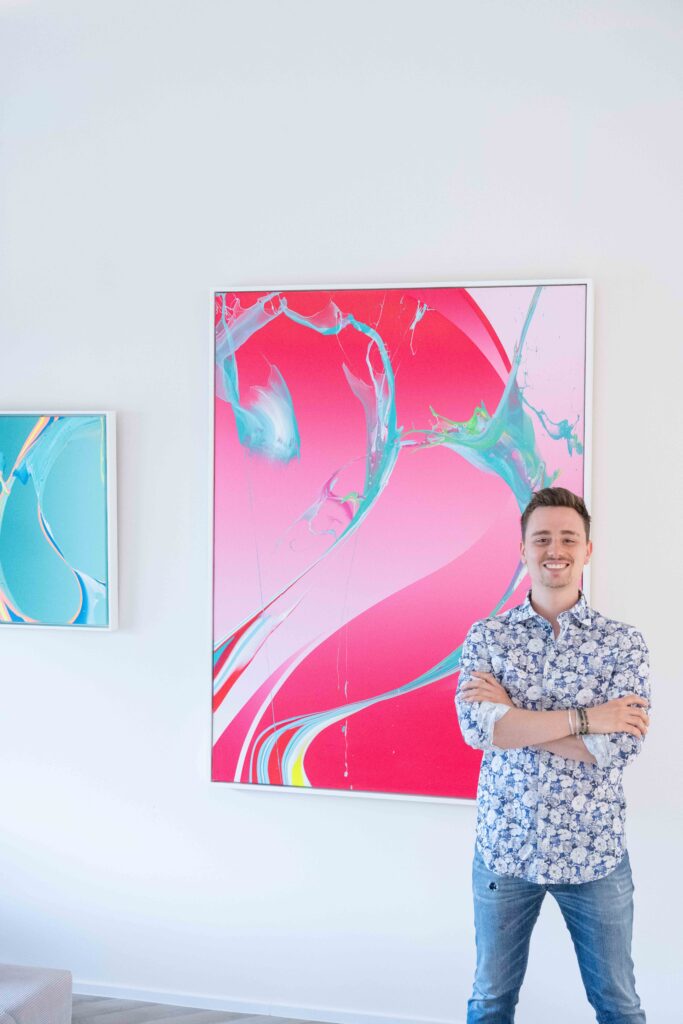
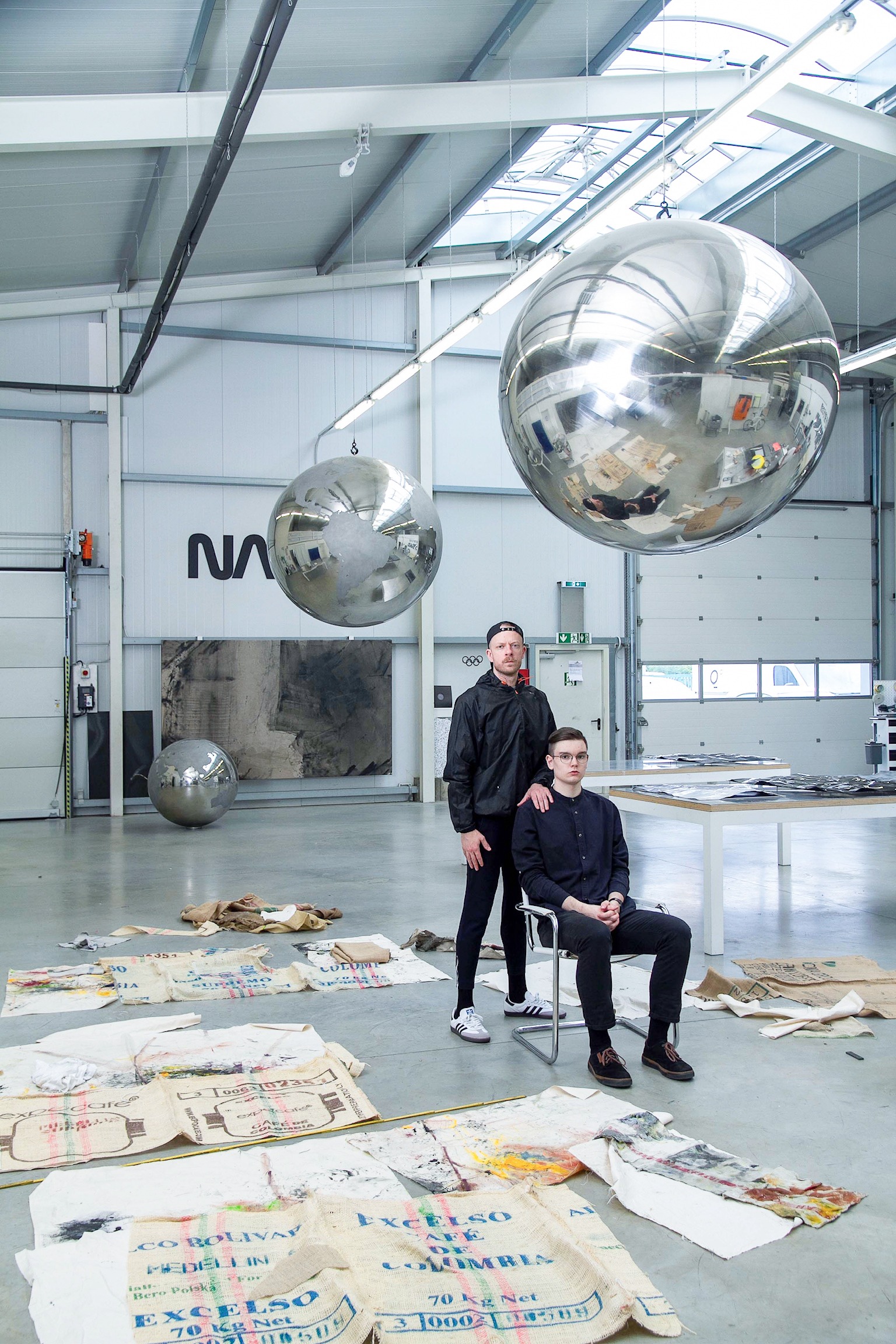
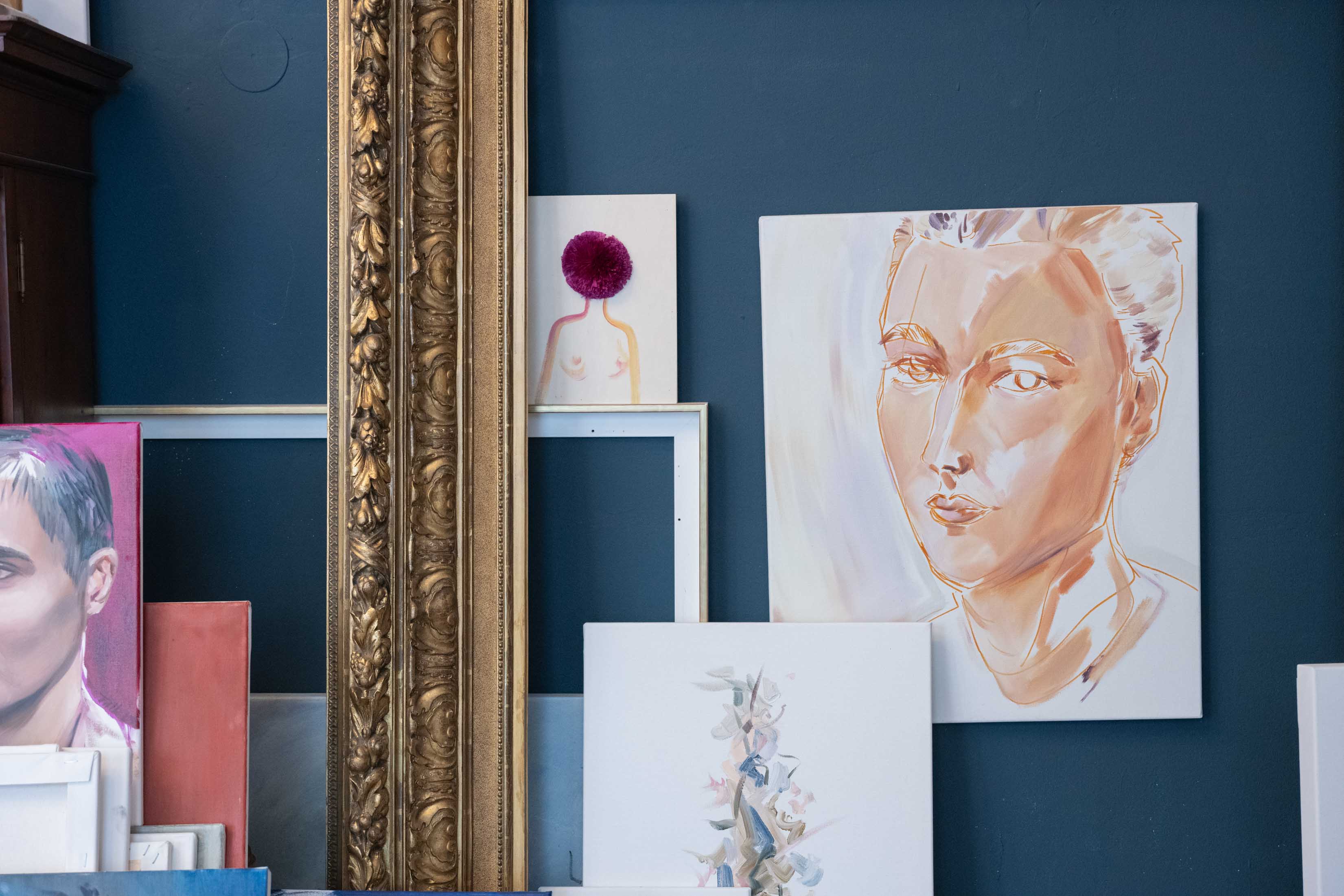
When I visit Tim Burger in his studio, the space feels like a controlled state of emergency. Between plants, paint splashes and large-format canvases, he talks about nature, electronic music and the energy of elemental forces – and about why his painting needs structure and chaos in equal measure. A place where design, instinct and colour become a visual language of their own.
When you enter your studio – what does this space say about you before you even say a word?
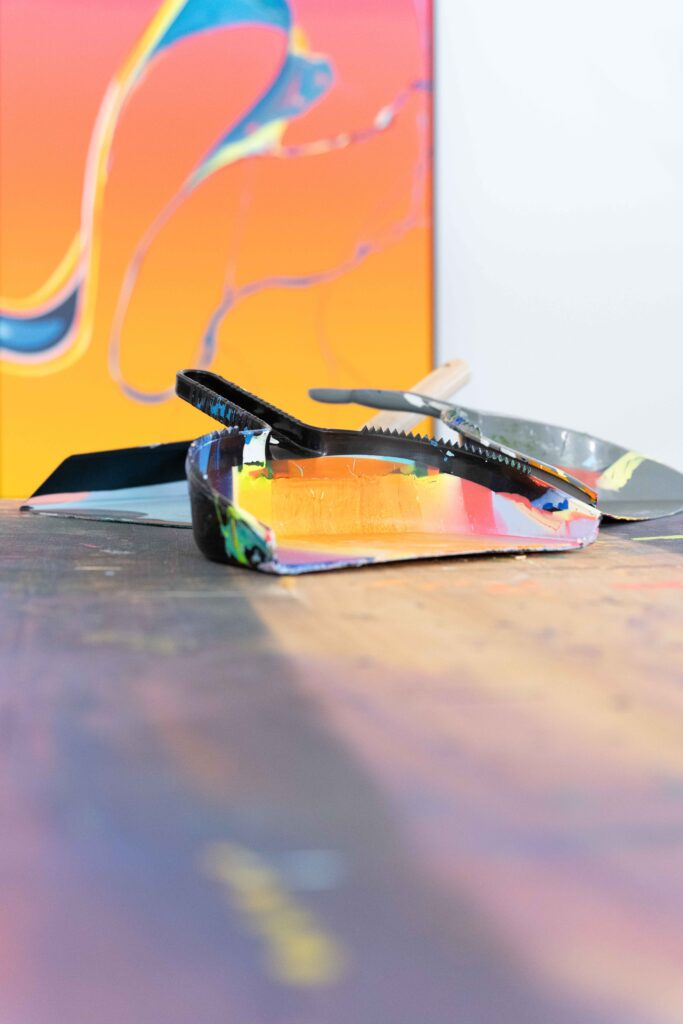
Probably first of all: nature. In my studio there is a large green jungle wall. Plants are an important part of my inspiration. I would love to have a studio in the middle of the countryside – since that isn’t so easy, I brought my own greenery inside.
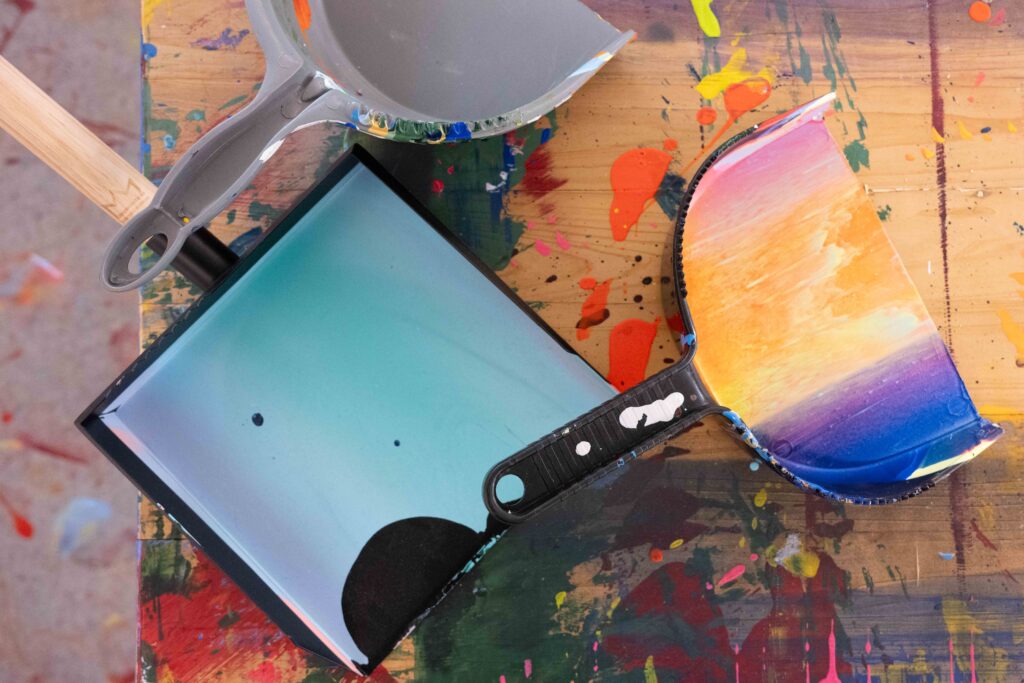
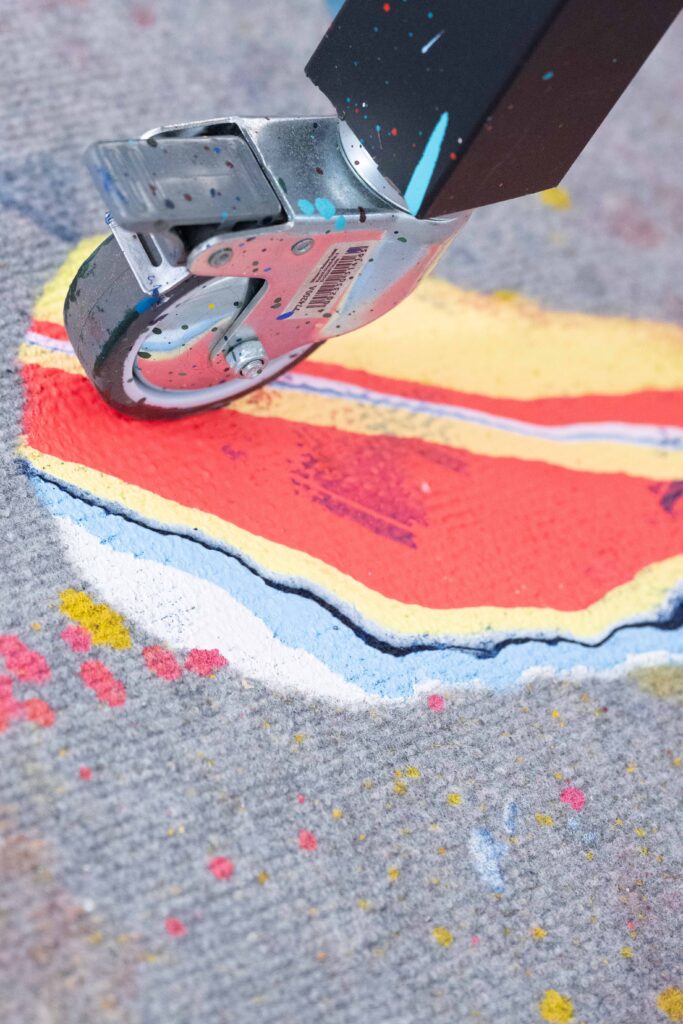
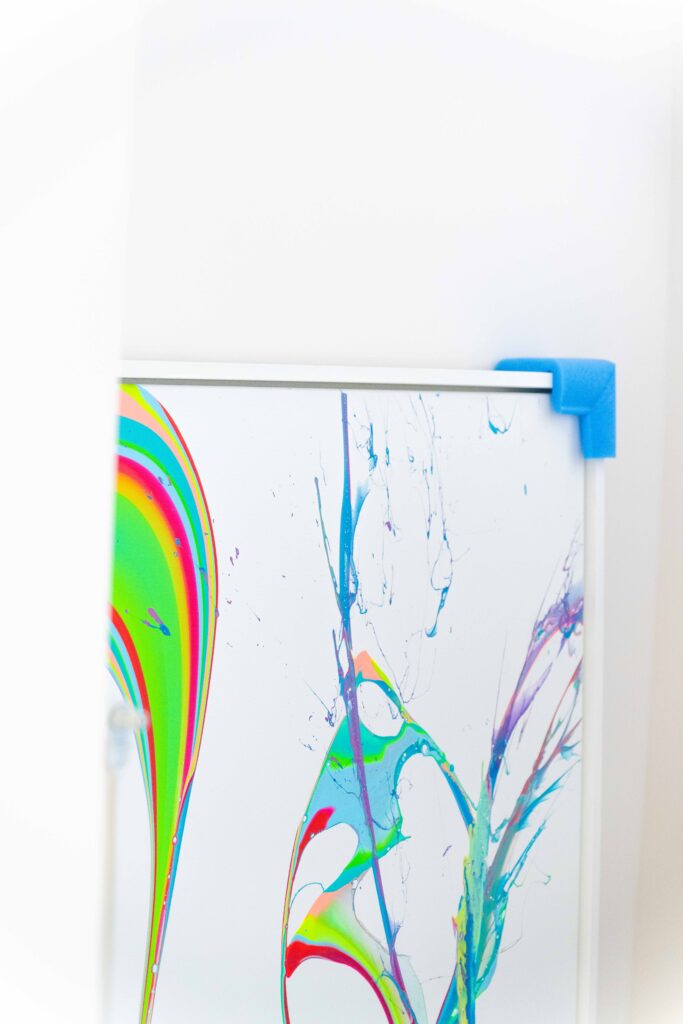
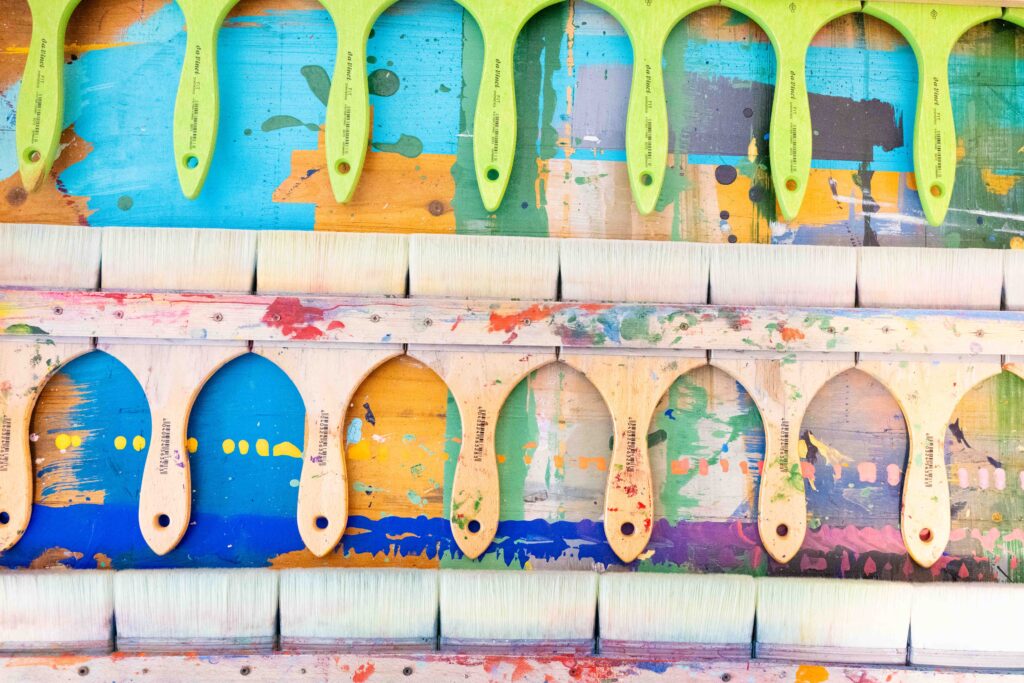
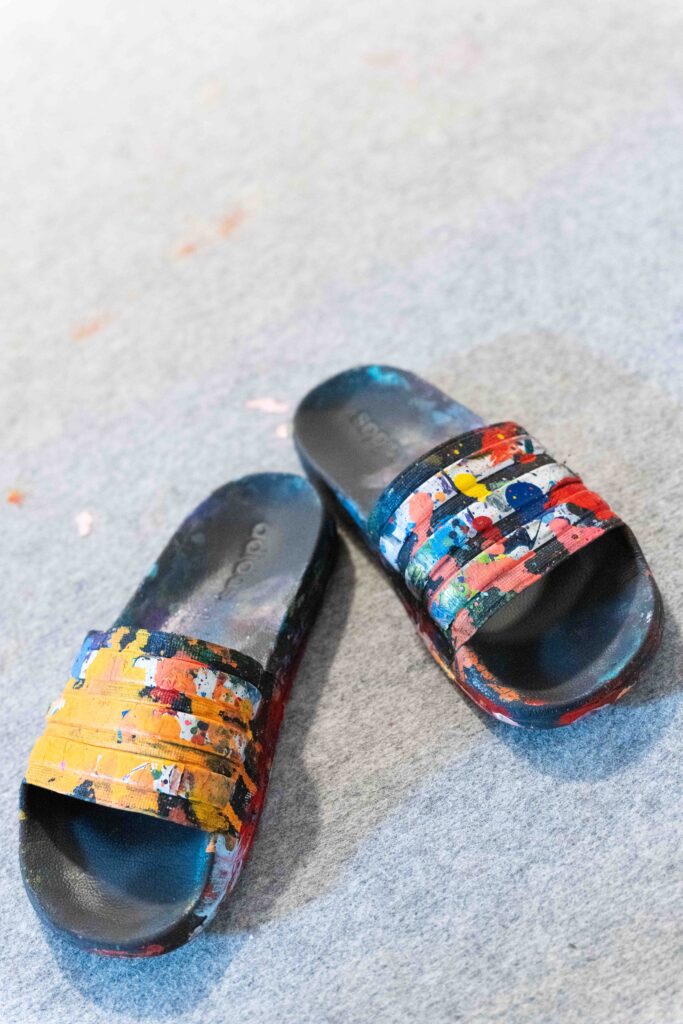
At the same time, the space also says a lot about the way I work. In my old studio, at some point you could hardly see the floor because everything was covered in paint. My painting needs space, movement and also the freedom to make a mess. That’s not something that works on a small easel in the garden.
You talk about “needing space”. When does this space really come about?
For me, space is first of all quite concretely room. I need it because my works come into being on a large scale. I move around a lot, push paintings aside, jump back and forth between ideas.
But space is also something mental. Sometimes I notice: now there is room in my head for an idea. Then I can go into the studio and give it space. Abstract art in particular needs both for me – the physical space and the inner one.
MAGAZINE
“It is honest when the process has arisen entirely out of my own creative work. When one step builds on the next – regardless of whether I knew the result beforehand.”
Your works seem like a dialogue between control and letting go. Is chaos a starting point for you – or a goal?
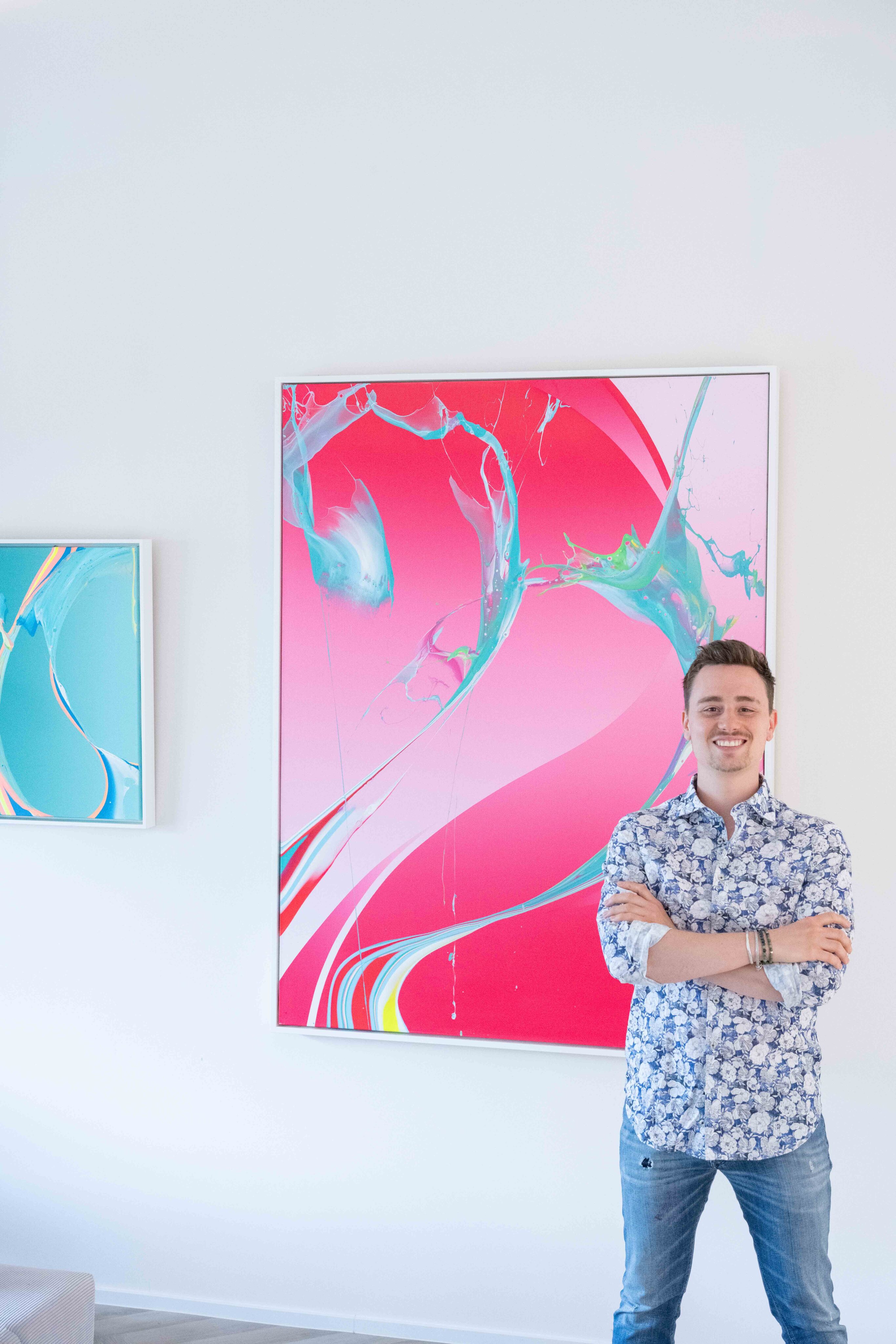
I usually begin with structure. That certainly comes from my graphic design background. I make sketches, test colours, gradients and compositions. Only then do I consciously allow chaos.
For me, it is a controlled chaos. The throws of paint and movements can only be planned to a limited extent. That is exactly what makes the process exciting. Sometimes I need a few days’ distance afterwards to see what has really emerged.
Fire, water, plants, light – your inspiration comes from elemental forces. What are you looking for in these elements?
Above all, I’m interested in the energy. Fire, water, waves or plants have something raw, undisguised about them. A wave doesn’t play a role, fire doesn’t stage itself, a plant simply grows.
With people, a lot is overlaid – by roles, clothing, social media or expectations. In nature, I see a more honest energy. I try to capture this force in my paintings.
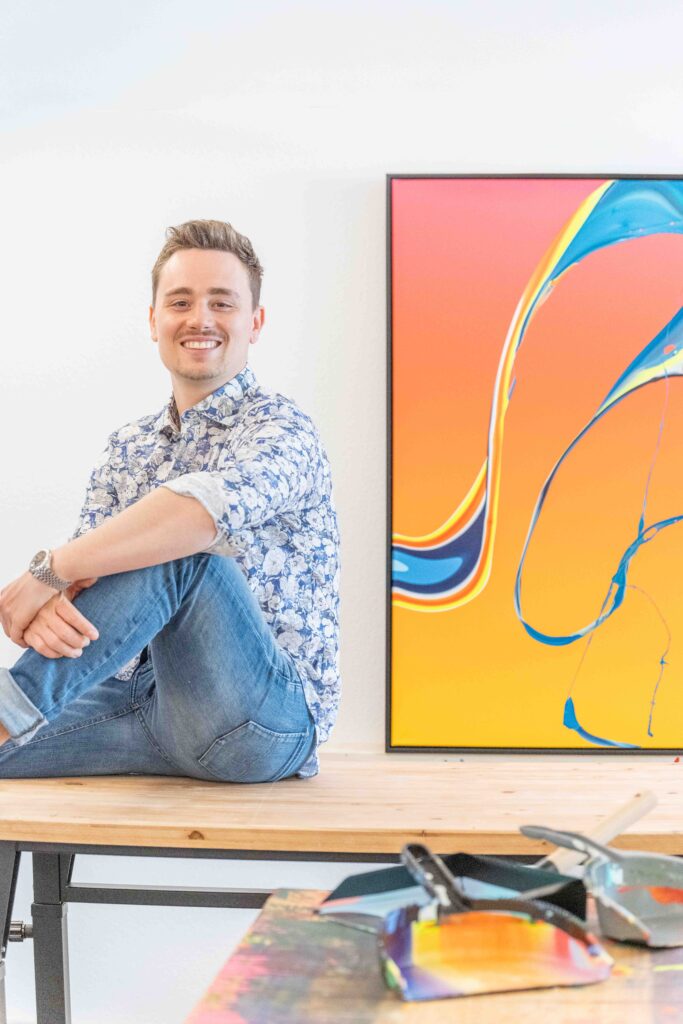
“I’m interested not only in the individual painting, but in the interplay of work, space, light and people.”
You come from design, structure and clear systems. What did you have to unlearn in order to work freely?
I had to learn that you can’t control a painting right to the end. In design there is Ctrl-Z. In painting there isn’t. Of course you can paint over things, but every step remains part of the process.
At first it was hard for me to accept that a painting turns out differently from the idea in my head. Today I know: that is often precisely where the strongest moments come from.
Electronic music accompanies your creative process. If you could hear your paintings – what would they sound like?
Probably like a bass drop at a festival when the lasers come on. Techno has accompanied me for a very long time, and this energy, this light, these neon colours can be found again in my works.
With some paintings, I hear nature instead: the roar of a wave, the crackling of fire. It is less about melodies, more about sounds, pressure, movement and energy.
You describe yourself as a dreamer who is at the same time searching for order. Is this tension a conflict or a strength?
Both. I need structure, but I can’t maintain it permanently. There are phases in which I am extremely orderly and planned – and then phases in which I spend days almost exclusively in the studio and everything else becomes unimportant.
Today I see a strength precisely in that. The structure gives me stability, but the dreamy side brings forth the actual art. I want people standing in front of my paintings to start dreaming again and to see things that perhaps even I haven’t seen.
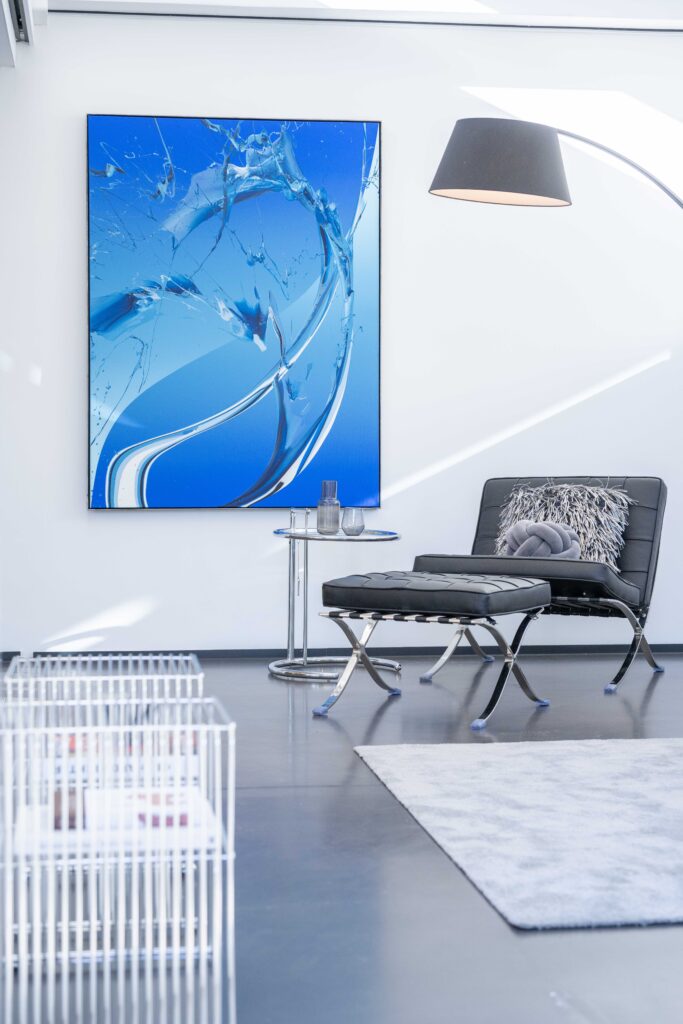
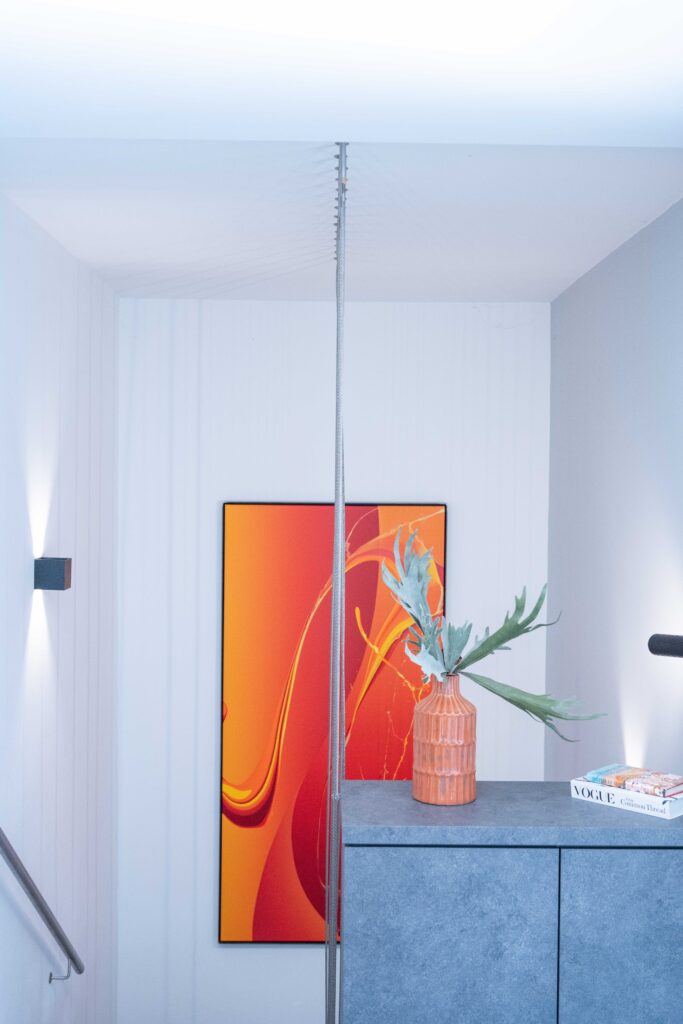
As part of our collaboration, five of your works are hanging in a villa above Heidelberg. You created some of them especially for the property. How do you know which painting suits a room?
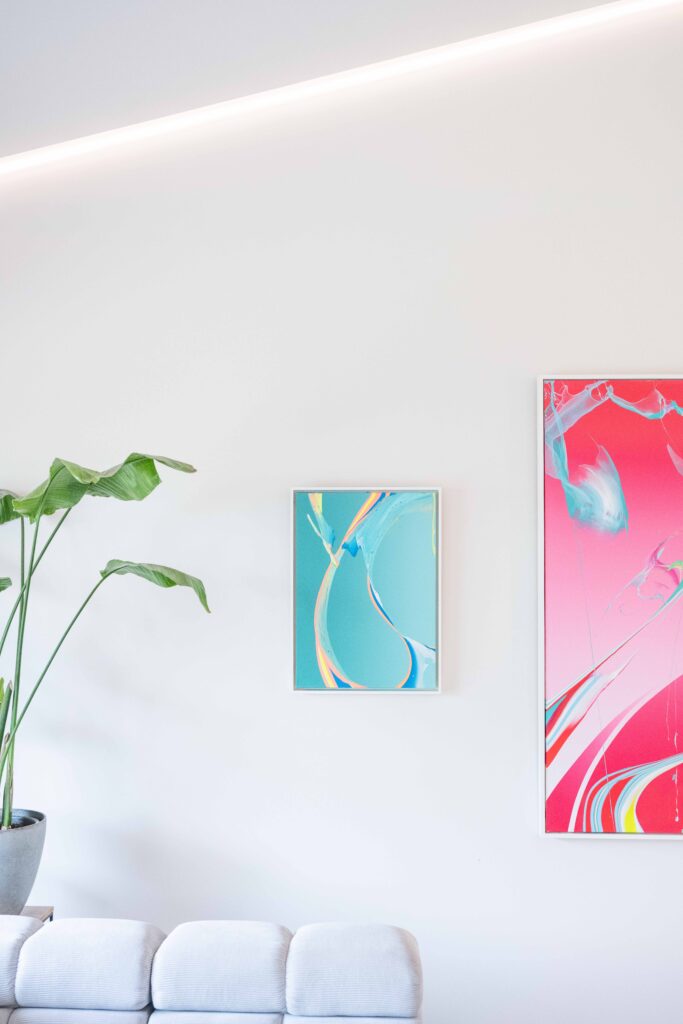
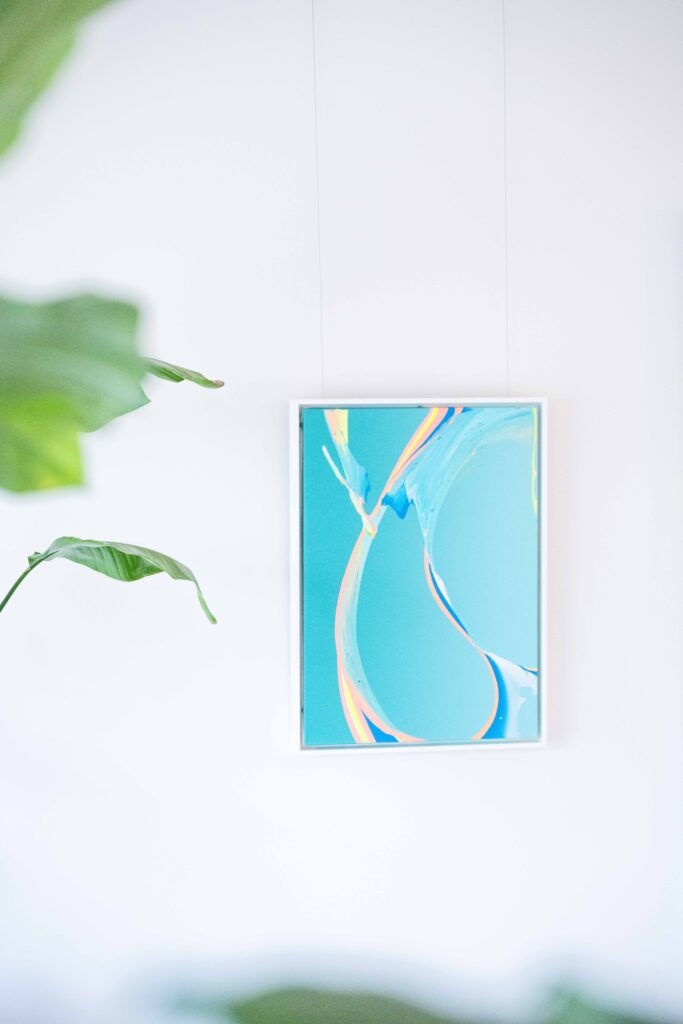
For me, the living room was the central space. The view reaches from Heidelberg to Mannheim, straight into the sunset. That’s why I wanted a painting there that takes up this luminosity – with yellow, pink and a kind of horizon mood.
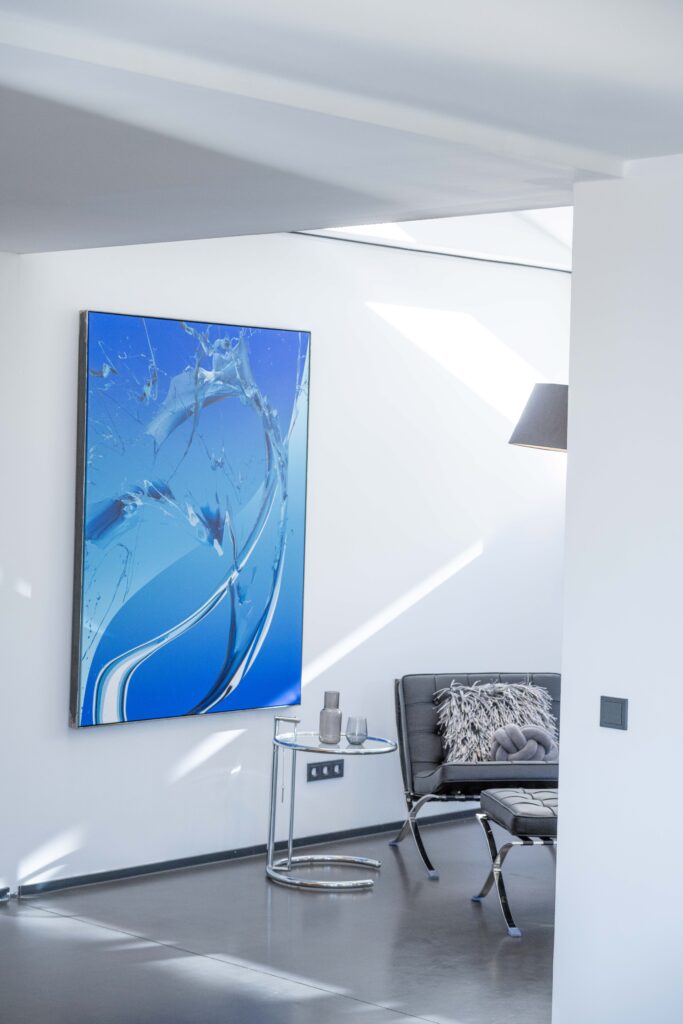
In the bedroom it became calmer: shades of blue, a night-time mood, blue hour. In the conservatory, a clear blue painting from my Ocean series was the right fit, because the room itself has something secluded about it.
The villa was a very special setting for my works. Lots of neutral architecture, strong spaces, good light. My paintings were allowed to be powerful there without competing with the house. That’s exactly what it’s about: creating contrast, but still creating harmony.
Tim, thank you very much for the conversation.

— Owner Hans Jürgen S.
“The presentation of the apartment was excellent, and we were looked after perfectly from start to finish!”
