Architecture | Speicher 7
Hotel Speicher 7
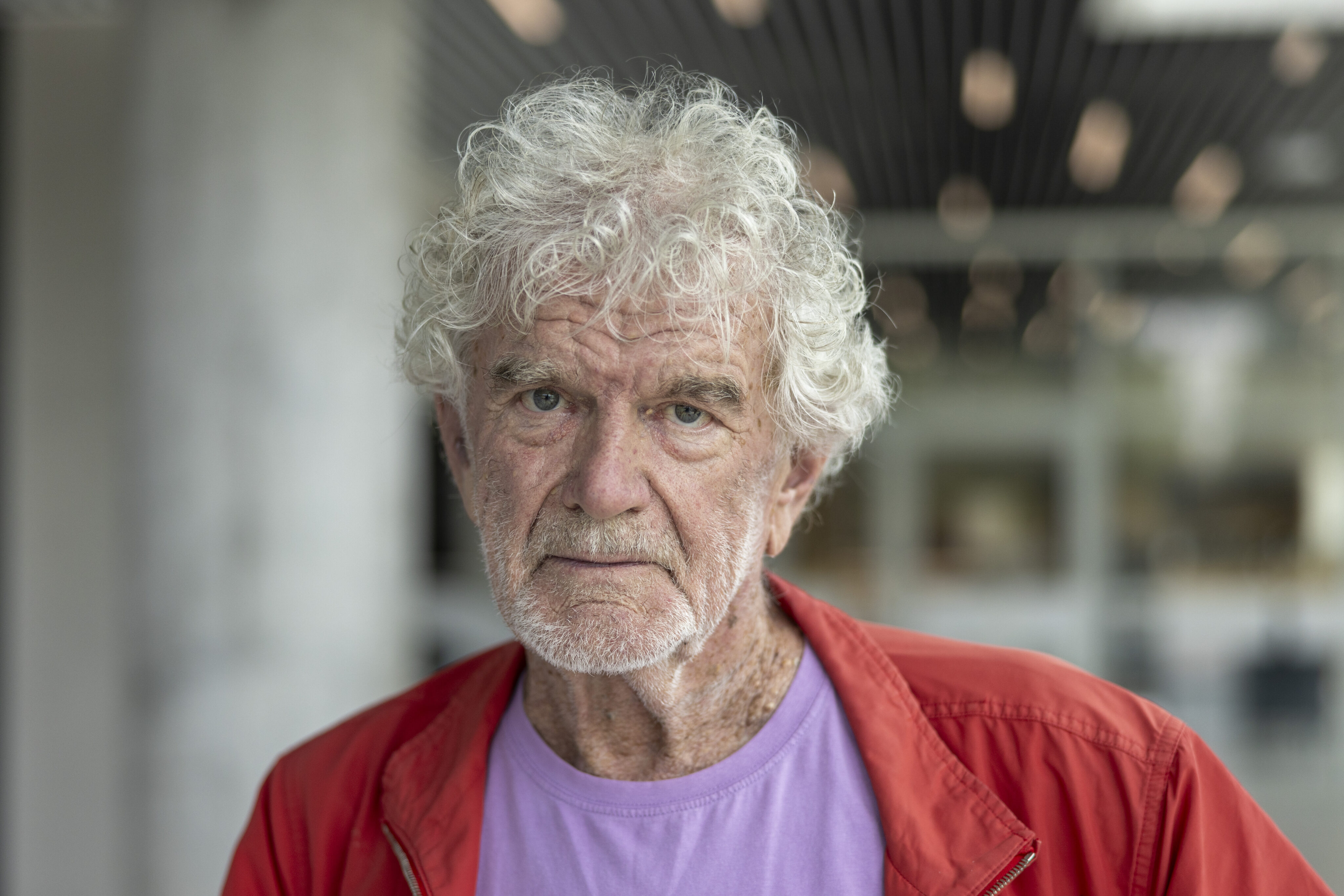
A conversation with Jürgen Tekath about the transformation of a former grain store into Hotel Speicher 7 in Mannheim – and about architecture, history, beauty and atmosphere.
Jürgen, how did you, as a florist, come to create Hotel Speicher 7?
A friend of mine, the architect Andreas Schmucker, took over the grain store together with six friends, originally as an office complex. He often asked me whether I didn’t want to open a hotel, but the locations never convinced me. When I came here to do the flower decorations for an event, I knew immediately: this is the place. I told Andreas that I could imagine a hotel here, and he supported me – without a financial plan, just with trust. Despite difficult regulations, the project became possible, and that is how Speicher 7 came into being.
When was the moment you knew that a hotel should be created here?
The moment came at exactly that event – I was standing there with my glass of red wine and suddenly knew: there has to be a hotel here. The financing was unclear, but I had a vision and thought: the money will fall from the sky somehow. We improvised, collected furniture and materials from Marrakech to Budapest and put everything together bit by bit. There were setbacks, but also magical moments, such as when the name Speicher 7 was immediately clear to us. The place is a mix of ideas, emotions and encounters – and in the end everything worked out.
MAGAZINE
“For me, beauty has a deeper meaning — it creates order, structure and influences how we perceive our surroundings”
What makes places attractive or magical?
The history of a place plays a big role – the grain store was built after the war as a reserve for emergencies. The surroundings contribute too: the Rhine used to be dirty and toxic; today it is one of the cleanest rivers in Europe and full of life. Places with history and a certain freedom, like the harbour, have a special effect – here you can do things that wouldn’t be allowed in the city. At the same time, the Rhine flows calmly on, connecting us with the world, while all around us trains, ships and planes keep everything in constant motion. A friend once said: if it doesn’t work out here, we’ll build a raft out of the mattresses and drift away.
Why do people experience Speicher 7 as a special place?
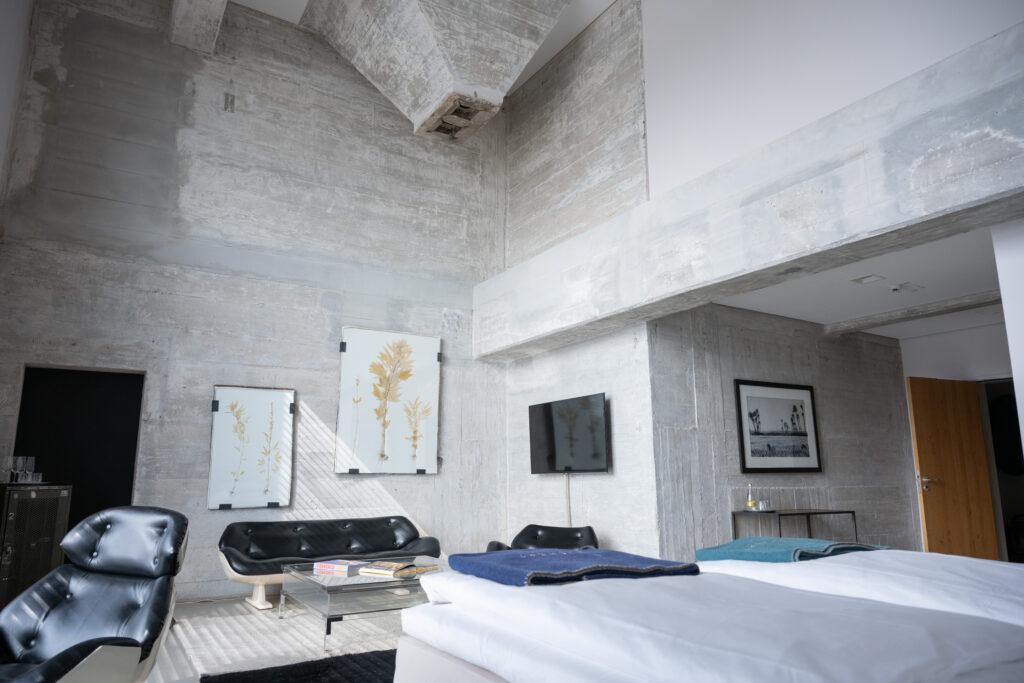
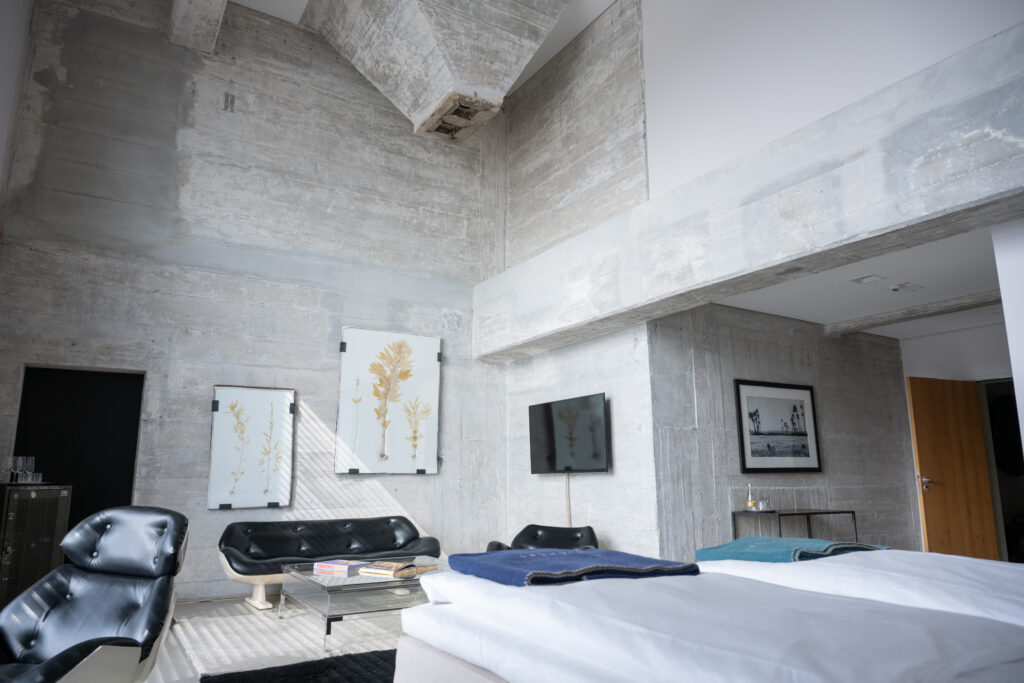
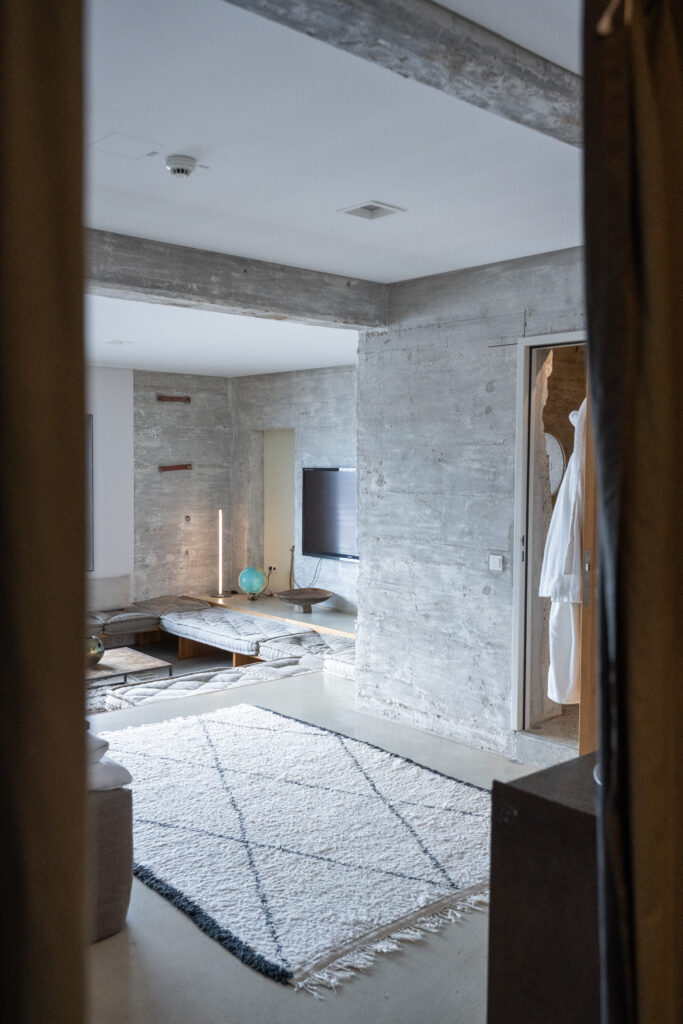
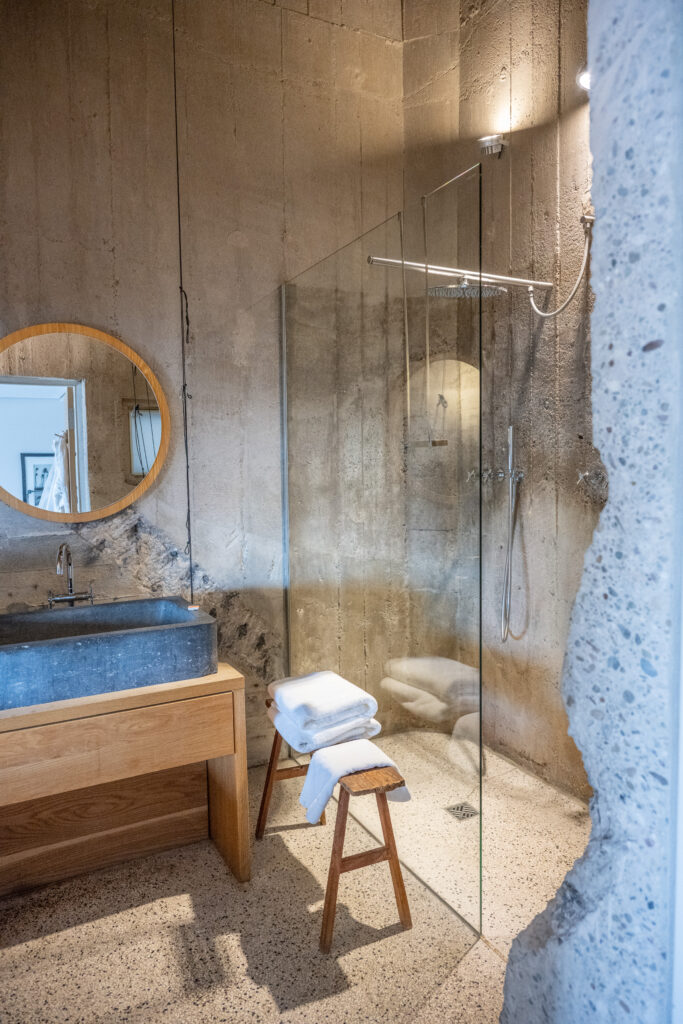
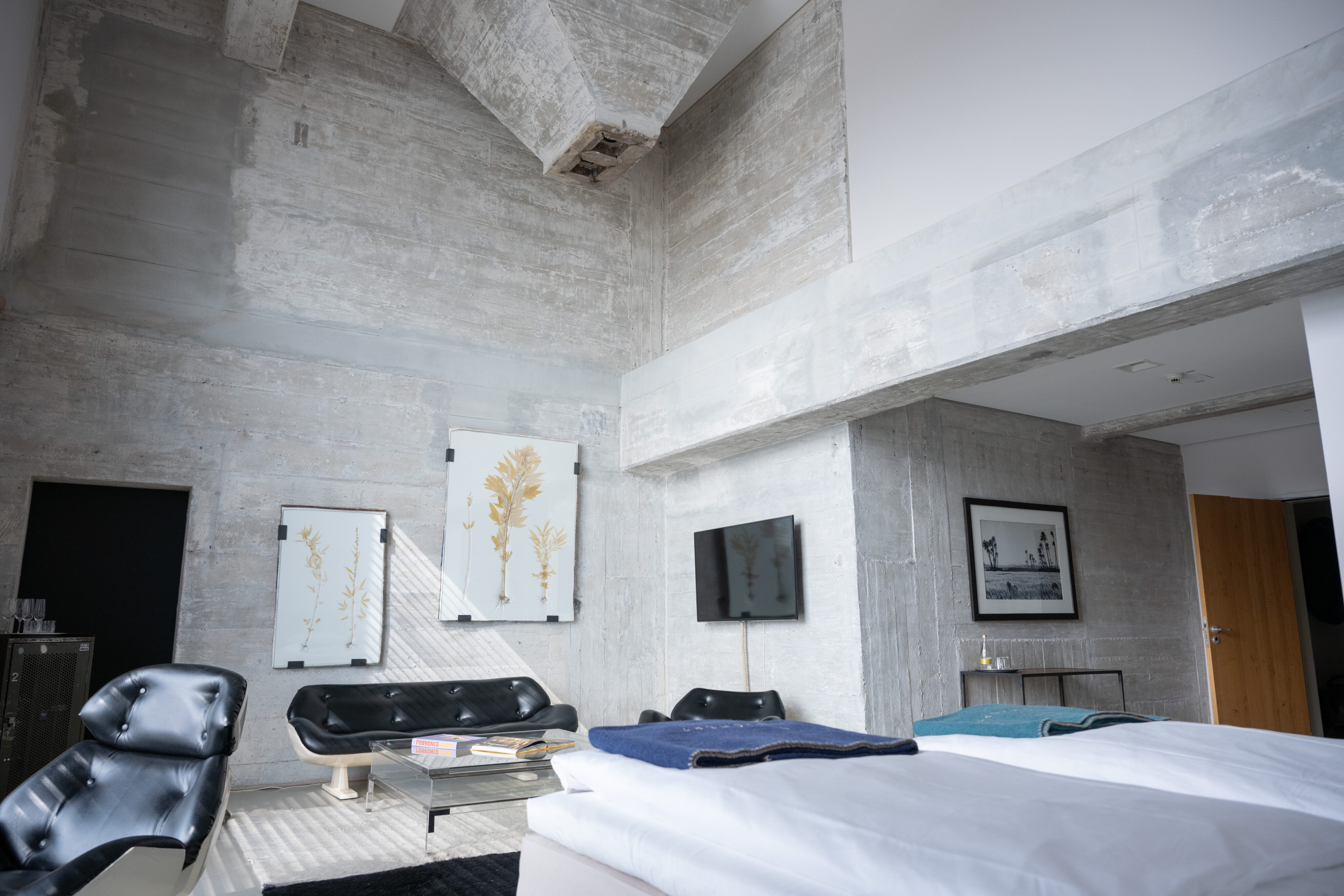
It’s down to the place itself – the building stood empty for 20 years, foxes and pigeons lived in it, it was a ruin. Today these traces have been closed with terrazzo, and some special elements such as the old goods lifts or the twelve-metre-high silo bathroom could be preserved. Many ideas came directly from the building itself – the place gave them to us. The hotel is a continuation of the grain store’s history, not an imposition on it. And perhaps that is exactly what you feel when you are here. Buildings like this show precisely why, with exceptional properties, history, architecture and atmosphere are part of how they are perceived and presented.
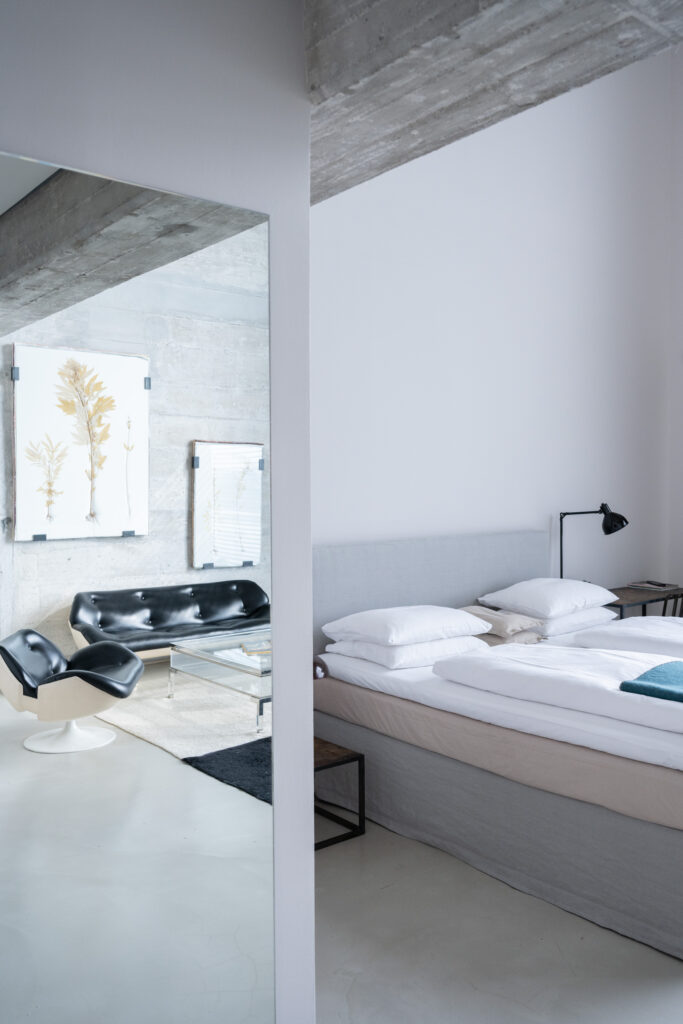
“My good fortune is that I work with people who give me the freedom I need, and we inspire each other.”
How do the urban Speicher 7 and the former working-class city of Mannheim fit together?
Mannheim has always been a city with spirit and history, shaped by industry, innovation and prosperity. It was almost completely destroyed in the war, and later many valuable buildings, especially from the 1950s, were demolished. Nevertheless, a lot is possible here – for 43 years I was able to sell the most expensive and extraordinary flowers, in Mannheim, not in Paris or New York. The city has character, even if many small, special places are disappearing. But anyone who walks through the streets here with open eyes and a smile often gets a smile back.

Is there a project you would like to tackle in the future or are perhaps working on right now?
I am working with friends on a small hotel lodge in the Atlas Mountains, combined with an organic flower farm that is to supply selected market stalls and hotels in Marrakech. This place is not meant to be just accommodation, but a retreat that brings together relaxation, nature and design – with a 50-metre pool, a gym and a yoga area, embedded in the impressive landscape with views of the snow-capped 4,000-metre peaks of the Atlas Mountains.
Marrakech inspired me with its unique atmosphere – a city full of creativity, where tradition and modernity merge in a fascinating way. Building regulations here are freer, so I can realise architectural ideas that would often fail because of standards in Europe. What I find particularly appealing is the opportunity to use sustainable materials from the region and to design the project in harmony with its surroundings. The Moroccan state supports environmentally friendly projects with subsidies for solar energy, irrigation systems and organic farming, which is an additional motivation.
I expect an opening in 2026 or 2027, as the gardens also need time to develop their full effect. My aim is to create a place that blends organically into the landscape, radiates calm and enables an inspiring dialogue between nature, architecture and people.
When you look back on all your work, what feeling does it fill you with, and is there a creative moment that particularly stands out?
When I look back on my creative life, what fills me above all is the freedom to do things without constantly being bound by financial constraints or rigid structures.
Everything developed step by step – from the flower shop via Café Flo to Speicher 7 – but in the end it is the flowers that have shaped me most.
They carried me out into the world, to San Francisco, New York and Berlin, where I was able to realise impressive projects. My good fortune is that I work with people who give me the freedom I need, and we inspire each other without getting hung up on working hours or hierarchies.
Of course there are challenges, but I have learned not to react immediately, but to approach things calmly. In Morocco I saw that it is less about perfection than about living in the moment – an attitude we have often unlearned. In the end, it is beauty, creativity and the right place in life that really count.
What significance do beauty and aesthetics have for you?
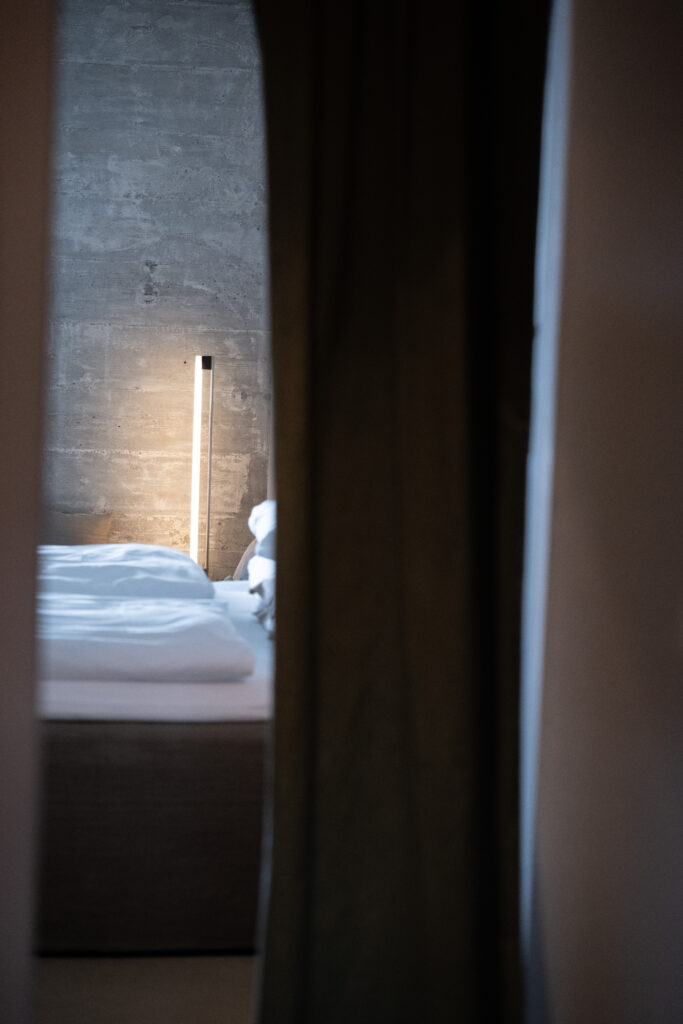
For me, beauty has a deeper meaning – it creates order, structure and influences how we perceive our surroundings. A talk by Stefan Sagmeister inspired me because it showed that well-designed places create respect and people automatically behave differently. But beauty is found not only in design, but also in nature, in the interplay of light, colours and movement.
My yoga teacher is from Persia and has been teaching in Germany for over 40 years. She once said: “In Persia there is a saying”, and added: “Your eyes are beautiful – and everything you see through them is beautiful.” That showed me that beauty arises not only on the outside, but also in our own perception. In Morocco, I experienced how design and tradition merge and how people create impressive things with few resources. There, beauty is not just an aesthetic concept, but part of everyday life. Ultimately, beauty and love are the only values that really count for me.
Dear Jürgen, thank you very much for the conversation.
Speicher 7 at a glance
Location:
Mannheim harbour, directly on the Rhine
Origin:
former grain store
Transformation:
from a long-vacant grain store to a hotel, without imposing on the building’s history
In conversation:
Jürgen Tekath on architecture, history, beauty and atmosphere
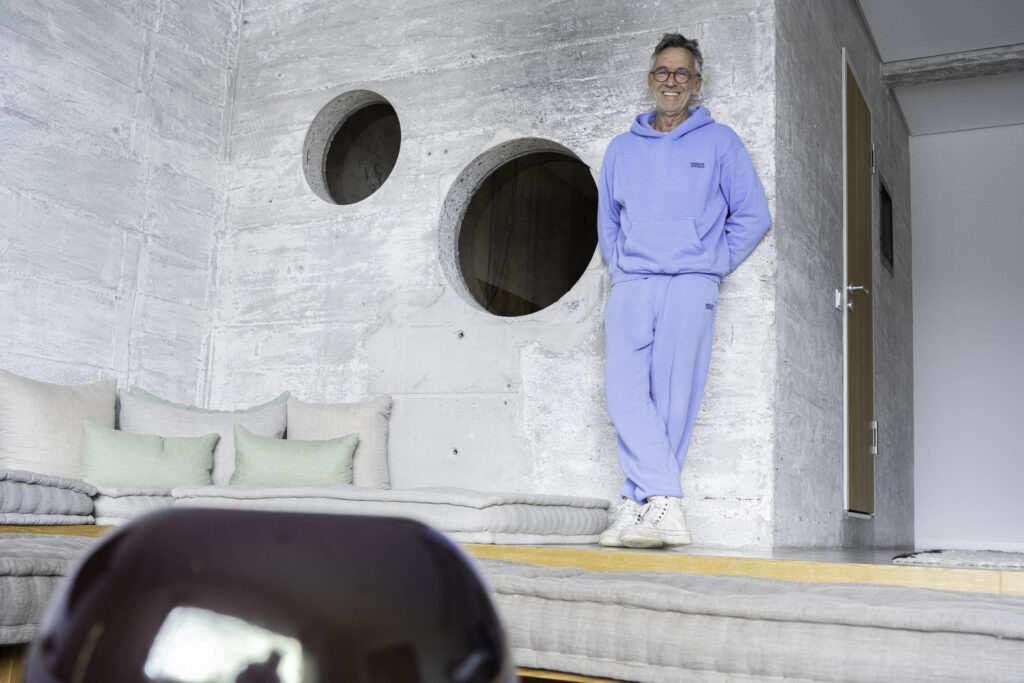


— Owner Hans Jürgen S.
“The presentation of the apartment was excellent, and we were looked after perfectly from start to finish!”
